Music operations
Is your music catalog earning what you expected?
How Recoup would help catalog teams use AI agents to prepare income comparisons, investigate gaps and build a reporting process their own people can run.

Your catalog brought in less money than forecast. An investor wants to know why.
Is a payment late? Is a statement missing? Or are the songs earning less than expected?
Those answers lead to different decisions. But before your team can investigate, someone may need to collect statements, reconcile spreadsheets and reconstruct what the original forecast assumed.
At Recoup, we believe AI should change where that work begins. A finance team should arrive at its reporting meeting with a comparison prepared, the supporting records attached and the unanswered questions clearly marked.
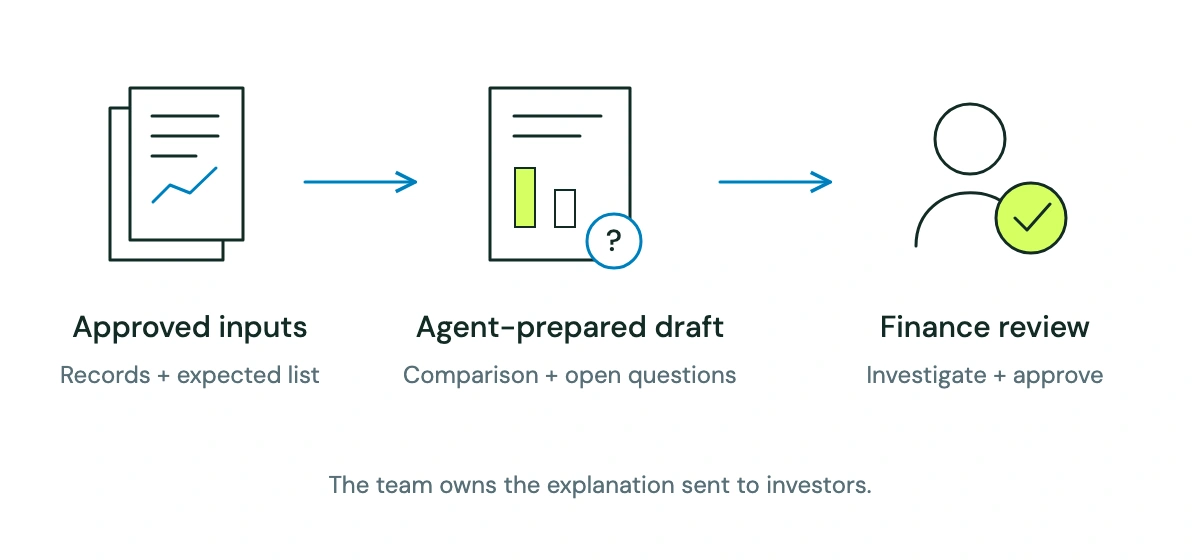
That is the job we would give an AI agent: an assistant set up to carry out a defined task using the company’s approved information. Finance would own the explanation and the decision.
Open a draft that shows what needs attention
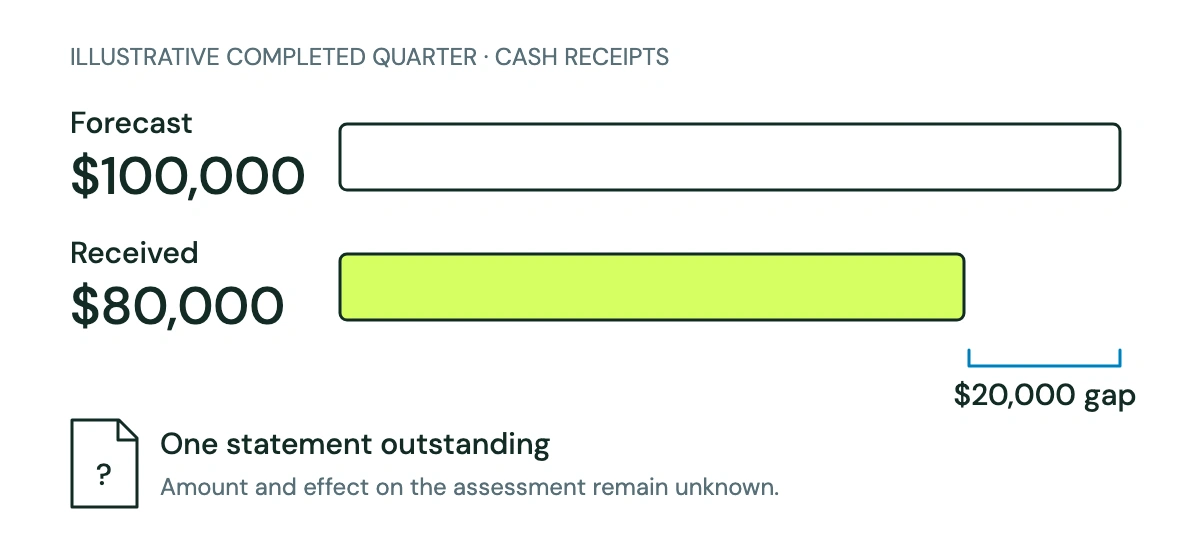
Imagine a completed quarter with $100,000 in forecast cash receipts and $80,000 received. These are illustrative figures. The $20,000 gap needs an explanation before it becomes an investor update.
We would set up the agent to check received records against finance’s list of expected statements and payments. It would then run the agreed calculations and prepare a comparison against the saved forecast. An outstanding statement would remain an open question; the draft would not assign it an amount.
Finance could open a draft that says:
For the completed quarter, forecast cash receipts were $100,000 and recorded receipts were $80,000. One statement is outstanding. Its effect on the assessment is unknown. The royalty manager needs to obtain it before finance completes the review.
The draft would link to the records behind both totals and list the unresolved questions. The team could begin with the missing statement and the payments that need investigation, instead of assembling the comparison first.
 View full-size image
 An explanation finance can defend
We would begin with the person who prepares the report and walk through a completed quarter together. Which files do they trust? How do they match payments? What do they check before sending the numbers onward?
We would turn those checks into instructions the team could review and the agent could reuse. The calculations must compare the same period, rights, currency and treatment of fees. A statement received this quarter may describe royalties earned earlier; the instructions must distinguish those earnings from this quarter’s cash receipts.
We would instruct the agent to preserve the purchase forecast and label any revised forecast by date, so finance could check which assumptions each comparison uses.
 View full-size image
 Start with a quarter your team already understands
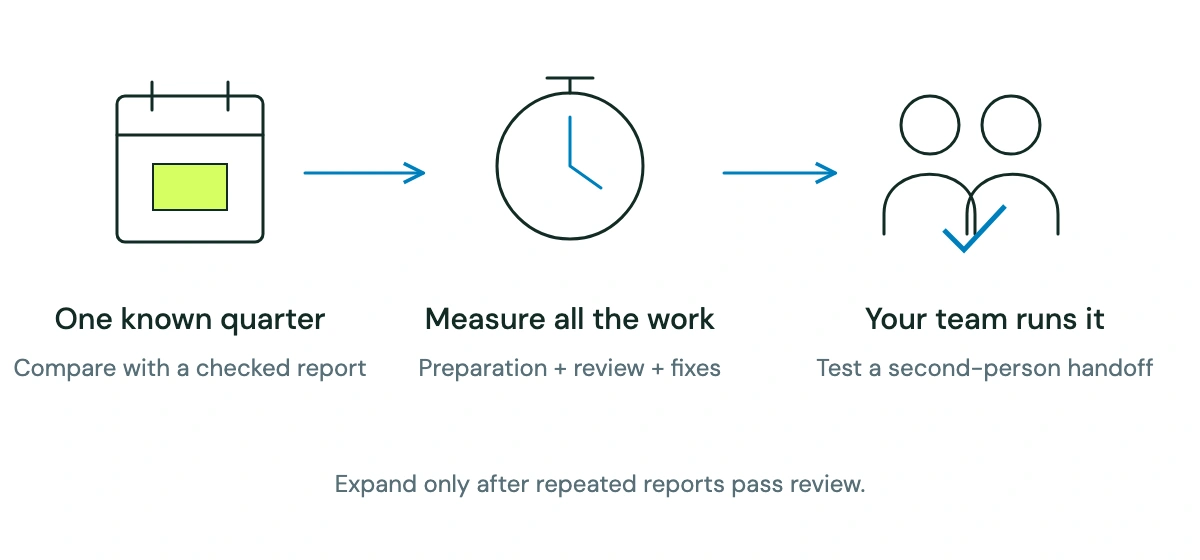
The first step is one catalog and one completed reporting period, using the company’s existing files and tools.
Together, we would compare the agent’s draft with a report finance has already checked. Did it use the right figures? Did it spot incomplete information? Could another colleague trace the answer without asking the builder?
We would measure preparation and review time together. If a faster draft creates more checking and corrections, the workflow needs improvement before it expands.
After repeated reports pass review, we would connect the recurring inputs and agree when drafts should run, where they appear and who handles failures. The team can adopt one useful reporting process without replacing every system at once.
 View full-size image
 Make the next quarter easier for your own team
Our view as a technology consultancy is that the company should be able to run and improve the workflow itself.
That means company-controlled instructions and access, a named person who keeps the reporting rules current, and a second authorized employee who has successfully run the process. A correction should become part of the next report’s instructions, with a check that it was followed.
The aim is to move more of the reporting meeting toward the questions that deserve your team’s judgment: what changed, what it means and who needs to act.
Bring us one recurring catalog report, the records behind it and the person who prepares it. We will use that starting point to identify what an agent should handle, what finance should retain and how to judge whether the change is worth the effort.
Ready to put AI to work on your catalog reporting? Start with Recoup at recoupable.com.