AI strategy
How to show your board whether AI is paying off
Compare a workflow’s full cost before and after AI. Use a board-reporting table that separates measured results, recalled estimates, and missing evidence.

A finance lead at a music company we work with told me that Claude had helped prepare royalty statements for the firm's semiannual catalog valuation. He described work that normally involved three people and took days across the team. The AI run took about half an hour and flagged statements it could not match to receipts.
The half hour was his estimate for the AI run. We had not measured preparation, review, or follow-up.
When we discussed presenting AI progress to the board, my advice was to compare what a task took before with what it takes now, and show where those figures came from.
Start with one workflow and a consistent scope
The catalog-valuation preparation had a recognizable input and purpose: gather six months of royalty statements and reconcile them against receipts for the outside valuation firm.
The finance lead reported that Claude matched the receipts and identified material it could not find. He helped resolve missing items.
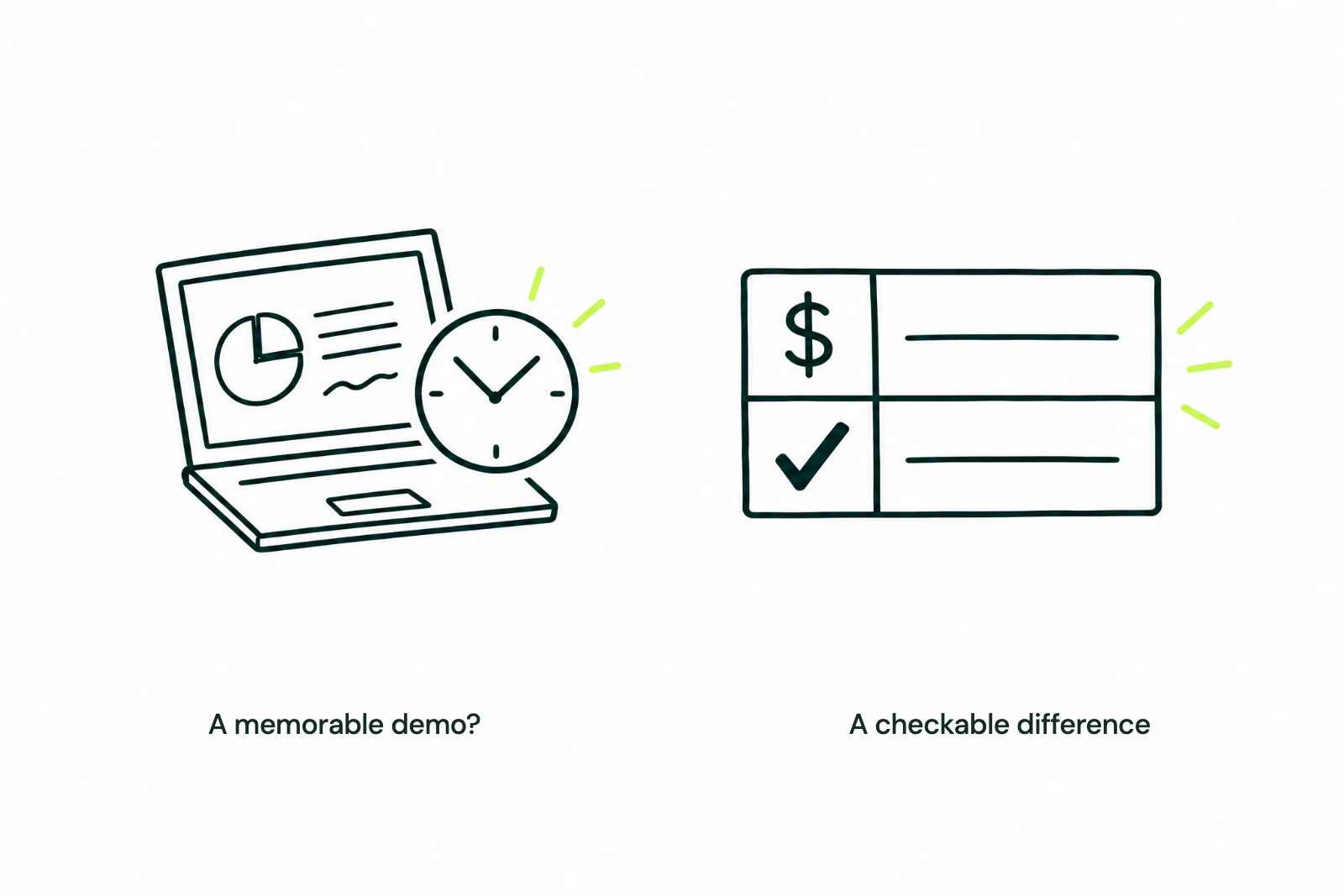
Before presenting savings, define the same start and finish for both versions of the task. For this workflow, that could run from collecting the statements through delivering the reviewed package, including any missing records that had to be found.
 View full-size image
 Put the old and new process in the same table
Use a table like this for each workflow. The entries below show what the finance lead's account supplied and what remained to be measured.
Scroll to see all columns
| Measure | Previous process | Process using AI |
|---|---|---|
| People involved | Usually three, according to the finance lead | Finance lead working with Claude; total staffing not recorded |
| Reported duration | Days of work across the team; recalled estimate | About half an hour for the AI run; recalled estimate |
| Total labor hours | Not recorded in this example | Preparation, review, and follow-up time still needed |
| Review and exceptions | Record the checks and work required | Missing statements were flagged; time to resolve them still needed |
| Recurring cost | Record labor and relevant software costs | Record labor, AI usage, software, and support costs |
| Setup cost | State any relevant baseline cost | Record time spent building and configuring the workflow |
| Evidence | Finance lead's account | Finance lead's account; verify with task records |
For your own update, add the reporting period and the person responsible for verifying the figures. Replace the gaps with records as they become available. If a figure remains an estimate, keep that label beside it.
Compare the full cost and the quality of the result
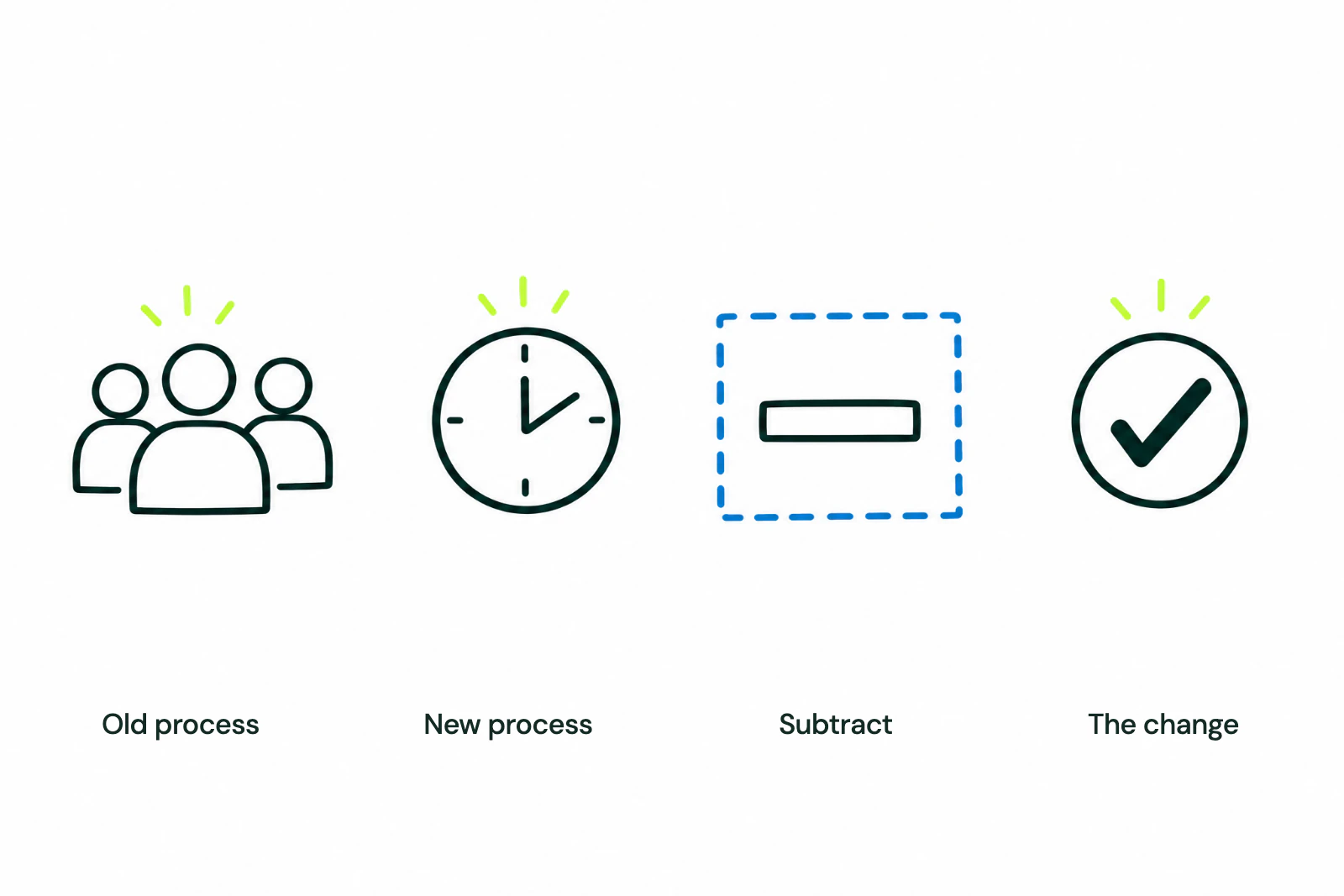
Total labor hours and elapsed time answer different questions. Add each person's time to calculate the effort involved. Measure the start-to-finish duration to show how long the business waits for the result.
Include time spent preparing inputs, reviewing output, resolving exceptions, and maintaining the workflow. Compare results against the same quality standard. A faster draft that needs substantial correction may not save much work overall.
 View full-size image
 Keep time freed for other work separate from spending the company actually stopped paying. If an employee uses the saved time elsewhere, report the capacity freed. If an external cost was eliminated, record the reduction. Include setup and ongoing costs before claiming the investment paid for itself.
Label estimates and check their sources
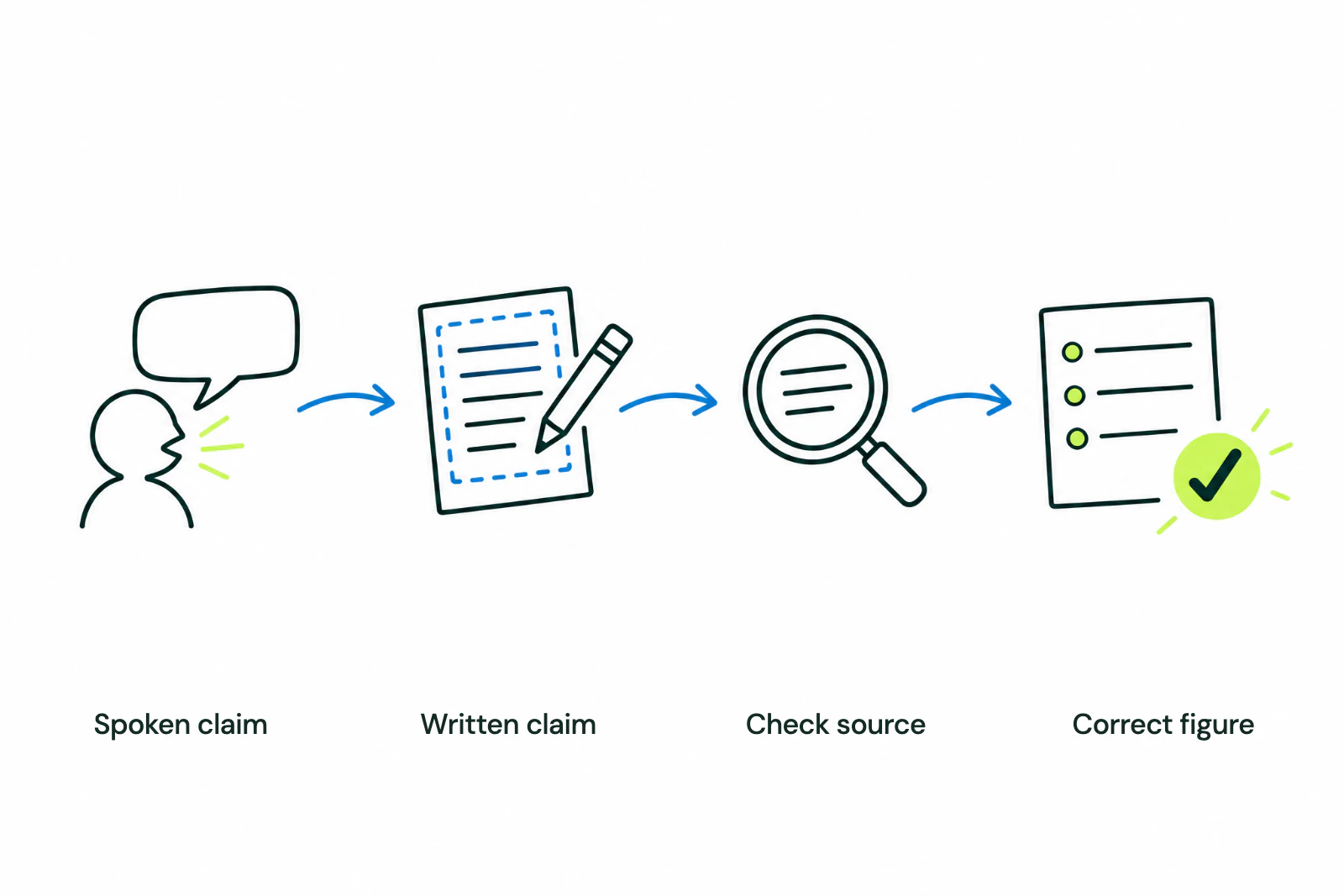
A recalled estimate can be useful when its source is clear. It should stay an estimate until you have records that support a more precise comparison.
For the catalog example, checking the call establishes what the finance lead reported. It does not establish the total labor hours or the cost saved. Those need their own evidence.
 View full-size image
 Keep the supporting record beside each number: a task log, time record, invoice, or attributed estimate. Give the board enough information to understand both the improvement and what still needs checking.
Report other benefits with the evidence they need
Some improvements concern quality or visibility rather than time. A workflow might flag a missing statement or an inconsistency that requires attention. Describe what was found, how it was checked, and what action followed. Avoid assigning it a cash value without evidence for that value.
For the catalog valuation, the next step was to measure the work around that half-hour run: collecting the statements, reviewing the output, and finding the missing records.