AI strategy
Your AI lives in one person's head
Keep AI instructions, tools, and access with the company, then test whether another employee can run the workflow without its builder.

“I feel like we're missing nine months of AI infrastructure,” a music agency's CEO told me after the employee leading its AI work left.
The employee had built workflows, content automation, and internal tools. The team had produced real results, including an AI artist. After the departure, the CEO felt the company had lost the ability to keep building on that work.
That conversation is why I ask clients a practical question: can another person on your team run an important AI workflow without its builder sitting beside them?
One departure exposed how much depended on the builder
A workflow can work well and still depend on one person's knowledge. They know which files to use, which instructions need updating, what access is required, and how to recognize a bad result.
Some of that knowledge may be written down. Some may be in a chat history or a personal account. Some may never have left the builder's head. Before assuming your team can take over, check where each part of the work lives.
Test the handoff while the person who understands the workflow is still available.
 View full-size image
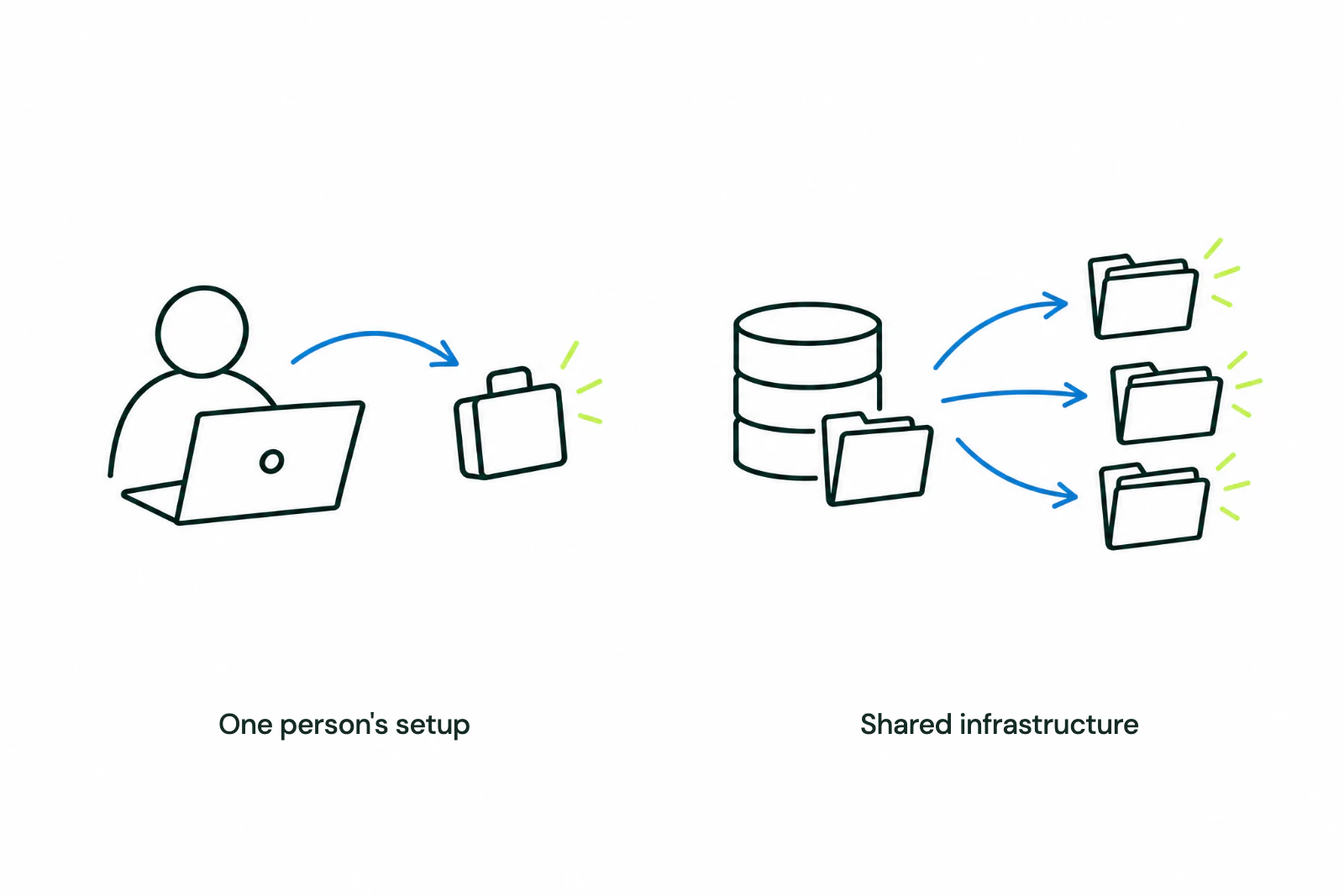
 Keep the instructions, tools, and access with the company
Start with one workflow the team relies on. Give it a shared, permissioned home and record:
- The task and expected result. What starts the work, and what should it produce?
- The instructions. Include saved prompts or agent skills: reusable instructions that tell an AI agent how to carry out the task.
- The inputs and tools. Identify the files, applications, and company-controlled accounts it needs.
- The access. Specify who is authorized to use the data and tools, and how access is granted.
- The review and maintenance owner. Name who checks the output and keeps the workflow current.
A shared folder helps people find the work. Working accounts and permissions let them use it. Keep a record of software licenses and ownership rights alongside those operating details.
Have a second employee run a real task
 View full-size image
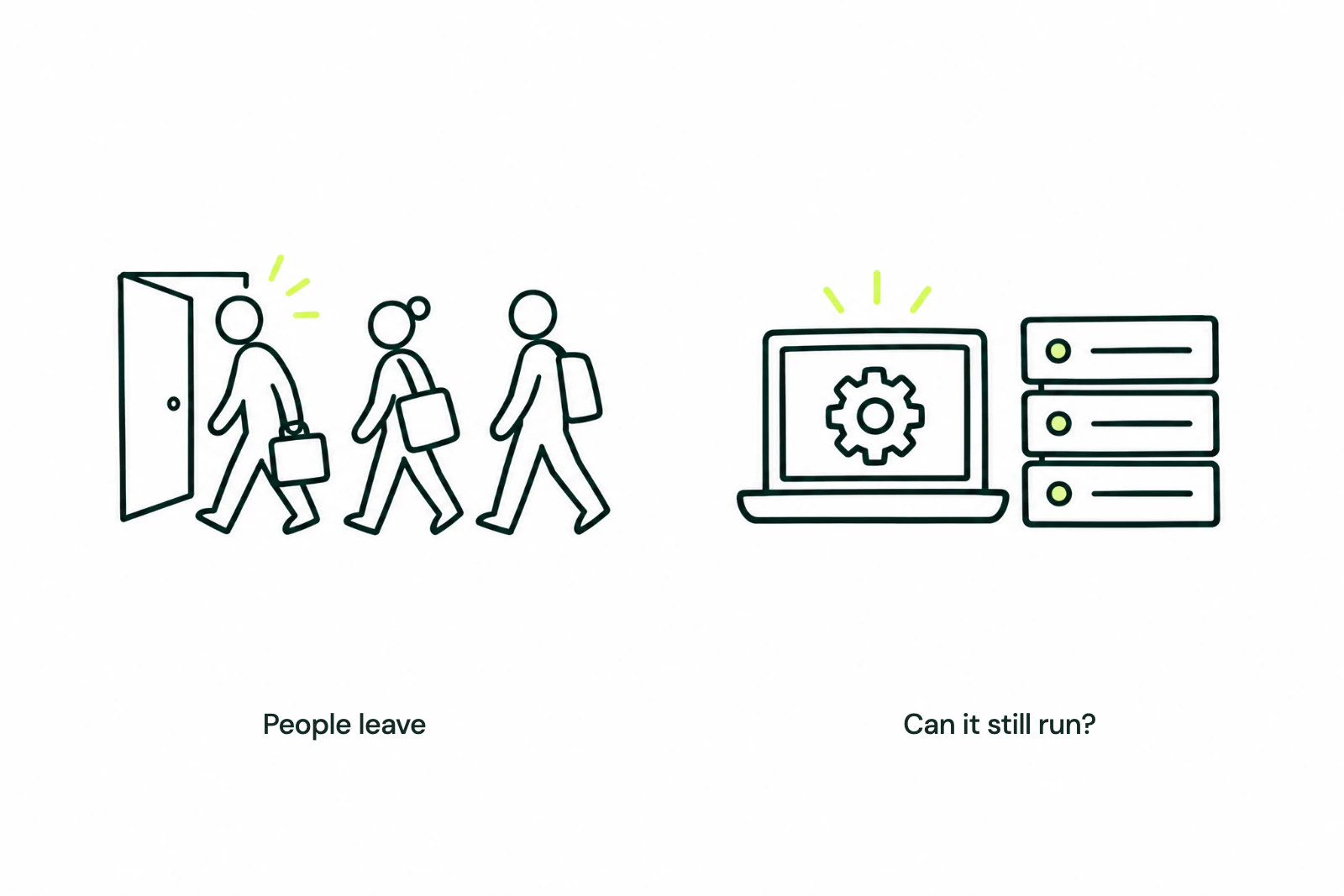
 Choose a second authorized employee and have them run the workflow from their company account. Give them the saved instructions and a real input. Let them work through it before the builder steps in.
Check both the process and the result. Could they find the right files? Did their access work? Did the output meet the team's standard? When something failed, could they tell what needed attention?
Each point where they needed help is something to add to the workflow or its documentation. Then repeat the run. This gives the team a more useful definition of “done” than a successful demonstration by the person who built it.
Repeat the handoff check as the work changes
 View full-size image
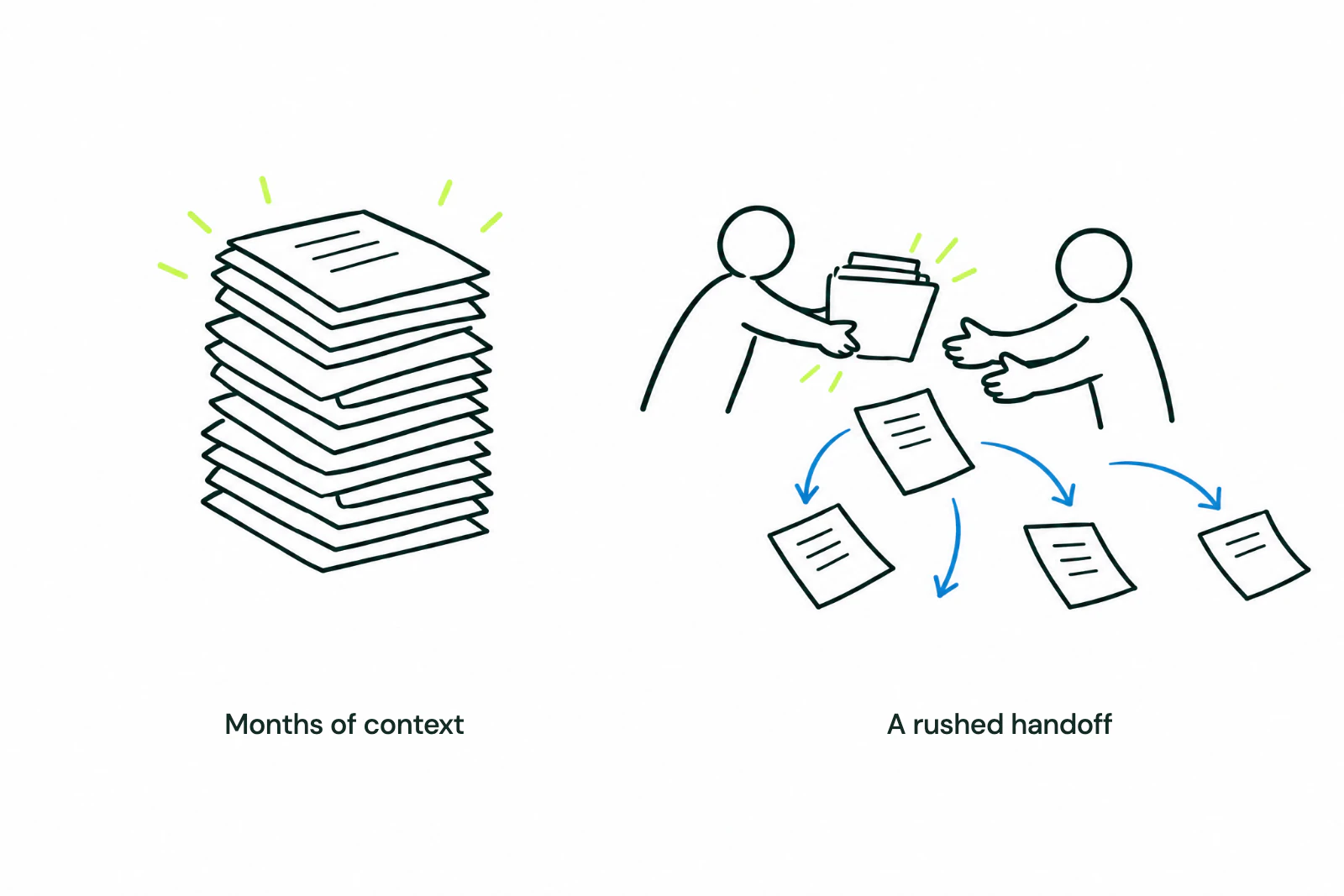
 Tools change, files move, and reporting requirements evolve. Repeat the check after a meaningful change, and give the maintenance owner time to fix what breaks.
Other teams may be able to reuse parts of the workflow. Have them test the instructions, inputs, and permissions for their own work before counting that as a shared capability.
For the next workflow your team finishes, put one more task on the list: have somebody else run it.